
#14. Luxury Sustainability: how retailers are becoming environmentally conscious.
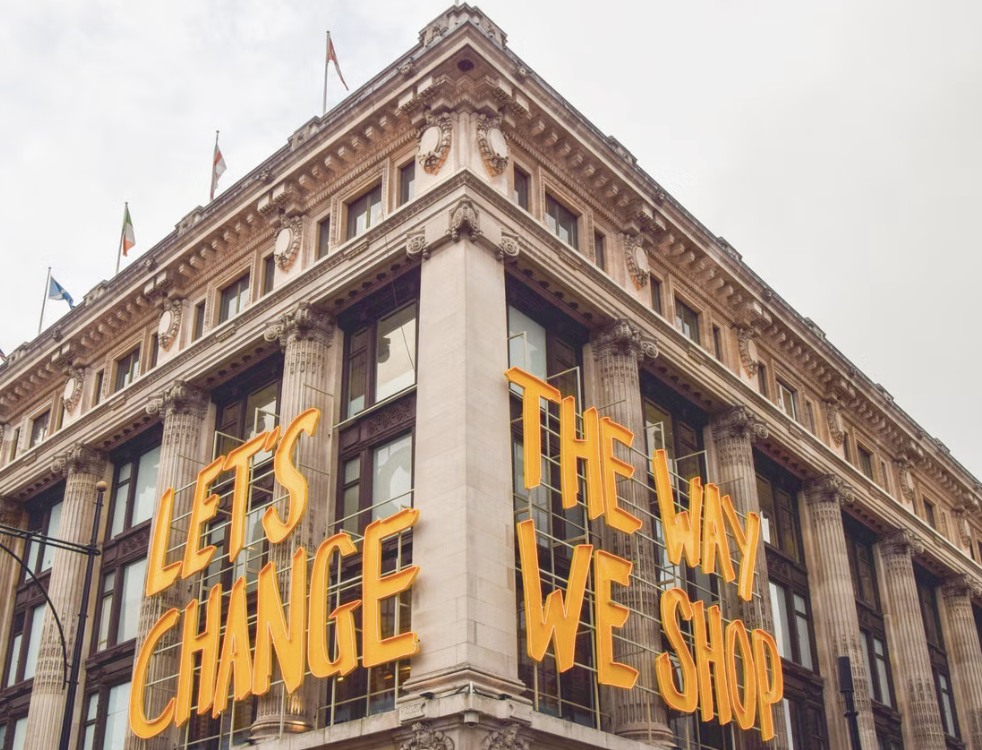
Selfridges, London flagship
When considering luxury retail, sustainability and recycling has not historically been considered. Unsurprisingly, the focus is on the luxury goods inside, rather than the physical nature of the shop itself. However, as is our specialty at Black Factory Studio, we are here to prioritise the sustainable fit out of your favourite luxury retailers, ensuring their long-term lifecycle.
Terminology such as the ‘circular experience’ has been floated around consumer orientated spaces much more in recent years, primarily focusing on the customer experience of product care, reusing and up cycling current merchandise, and how this maintains and boosts engagement and viewership. The gradual onboarding of sustainability such as this can be seen through the likes of household names such as Louis Vuitton, Selfridges and Harrods, who have all introduced specific initiatives to reduce their ecological impacts.
In 2020 Louis Vuitton launched its sustainability plan, “Our Committed Journey”, with intentions to generate 25% of profit via circular services such as its ‘repair-and-care task force,’ focusing on regeneration and the sustainable sourcing of materials. The connection between the human experience and a product’s lifecycle is crucial in translating the ‘circular experience’ across to architecture, design and improving the longevity of luxury retail.
The iconic department stores Harrods and Selfridges are working similarly, with both pledging to drastically cut greenhouse gas emissions and introduce responsible material specifications and sourcing. Harrods’ goal is a 90% emission reduction by 2030, with 2026 marking the deadline of their goal to switch to 75% renewable lighting. This lighting commitment is an excellent example of how sustainability can be encouraged in smaller, more design focused ways whilst still making major impacts.
Selfridges is also actively cementing itself as a leading flagship of sustainability, becoming the first department store in the world to sign The Climate Pledge. The company is actively pushing initiatives, such as luxury second hand clothing pop ups throughout their shops, and have pledged to be net zero in carbon emissions by 2040. Furthering this, across all renovation work they currently require all lighting, raw materials and wood to be 100% sustainably sourced, with other materials prioritising European origins and recyclability, proving that luxury sustainability is both possible and achievable. This encouragement for sustainability to move beyond the products within Selfridges and towards the physical evolution of the store is a great alignment with our own sustainability ethos, in that creating greener designs will allow for longer term success and impact.
The Mayor of London’s “Response to Climate Change Plan” further supports these shifts, with the Planning Decisions chapter focusing on minimising elements such as waste carbon emissions, and instead encouraging sustainable design to be implemented from the beginning of every project to ensure a clean and efficient outcome with sustained benefits.
Ultimately, there are wide and varied examples of how sustainability works across commercial and luxury retail, both inside and outside your favourite buildings. The drive to encourage more sustainable methods of practice across architecture, design and construction is an important one. We hope you will feel as inspired as we do to continue the fight to be sustainable and ecologically friendly, whilst still building a beautiful world, together.